


This is post #3 in the WPC blog. Click here to visit the blog homepage.
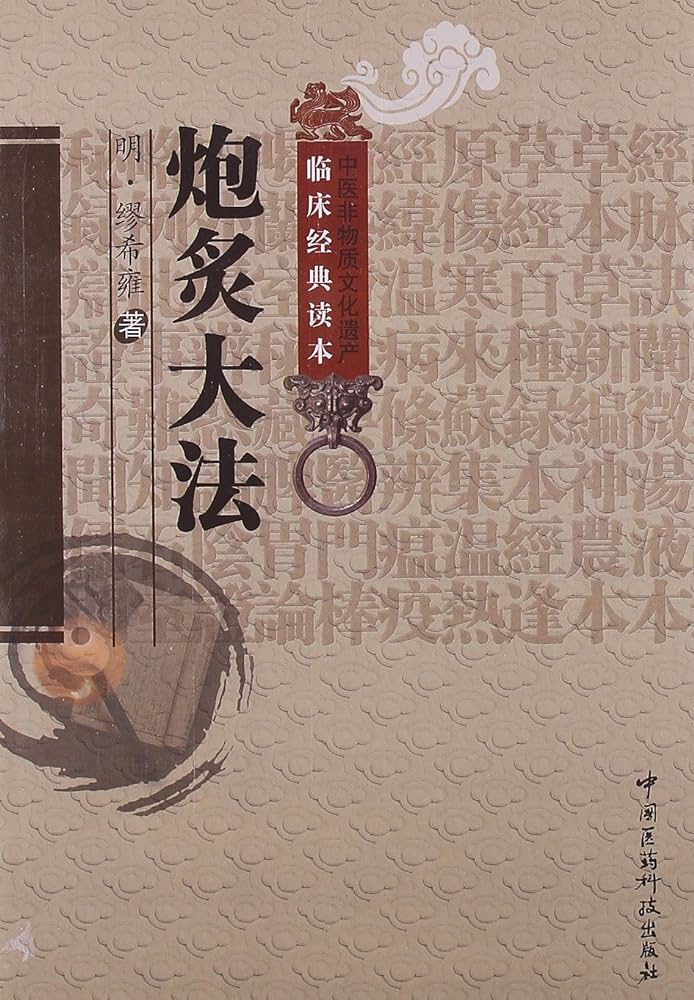
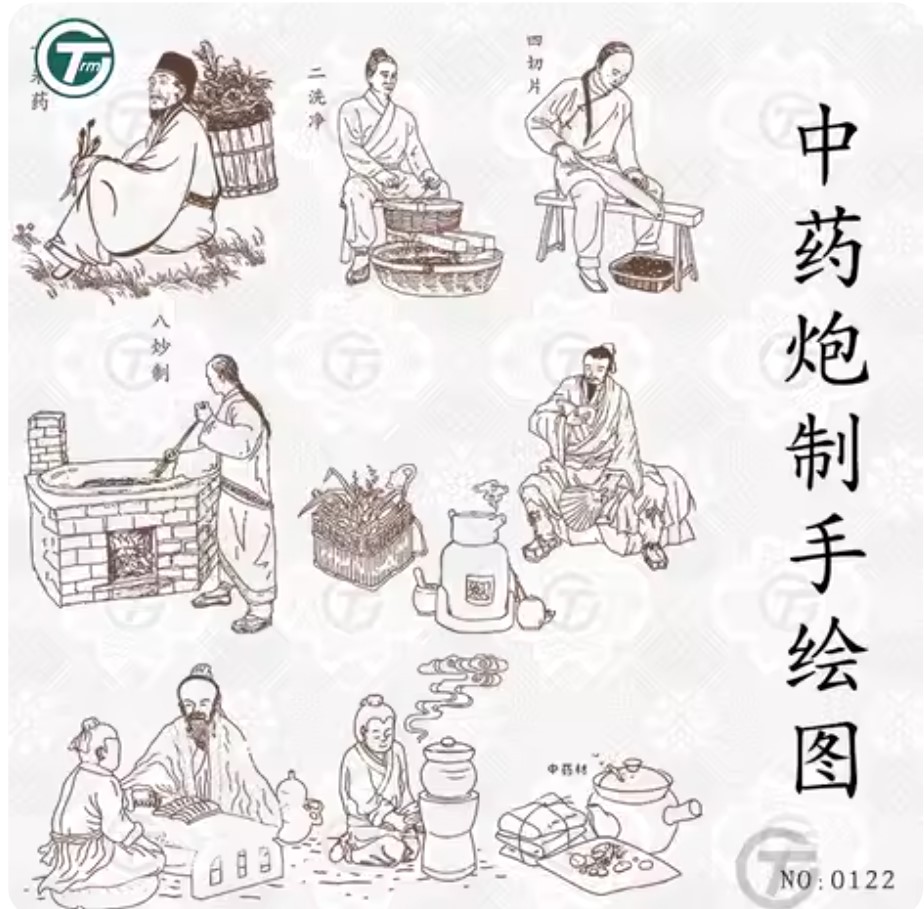 Páozhì Dàfǎ (Fundamental Methods of Processing Medicinals) was written by Miào Xīyōng and published in 1622 (Míng). Miào was from Jiāngsū Province. His father was involved in palace intrigues and was killed by rivals, leaving the son to grow up in poverty. Miào suffered chronic malaria as a teenager, so he studied formula books and treated himself. After recovering, Miào studied medicine. He liked to travel, looking for teachers and collecting formulas.
Miào wrote up his research in Xiānxǐngzhāi Yīxué Guǎng Bǐjì (Extensive Notes on Medicine from the First Awakening Studio) as well as in other books. Páozhì Dàfǎ is a section of Xiānxǐngzhāi Yīxué Guǎng Bǐjì but was also published as an independent book. Páozhì Dàfǎ was based on Léigōng Pàozhì Lùn (Master Léi’s Discussion of Processing Medicinals) but the text was adapted according to the author’s experience. Páozhì Dàfǎ describes preparation techniques for 427 medicinal substances. At the end, there is a general section on the use of herbs, including this Guide to Using Herbal Medicine.
Why is this essay important? At first glance, many of the details seem outdated today, especially if you use granules or commercially produced pills. However, one can gain insight into the thought processes of ancient herbalists through studying this text. Here are some of the concepts it revealed for me:
- Why were some formulas specifically designed as pills or powders or decoctions? We find out that ‘powders scatter’. Most Sǎn formulas eliminate excesses, evils, or accumulations because powders have an inherently scattering nature. Think of 人參敗毒散 Rénshēn Bàidú Sǎn or逍遙散 Xiāoyáo Sǎn. While both contain some supplementing herbs, their main purpose is to expel evils or disperse accumulations. An exception is 生脈散 Shēngmài Sǎn, which is made as a powder so it can be quickly used in an emergency.
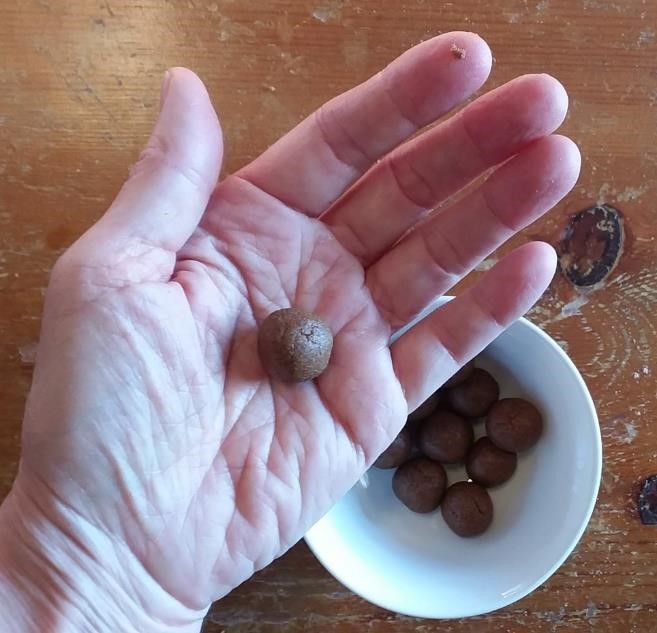
- Why were some pills made with honey and others made with water or another thin liquid? Honey pills are large and moist so they are chewed. 六味地黃丸 Liùwèi Dìhuáng Wán was designed as a honey pill. Water pills like 保和丸 Bǎohé Wán are dried until they are very hard so they must be small enough to be swallowed. This text tells us that the larger the pill, the lower it goes within the three jiāo. Therefore, big heavy honey pill like Liùwèi Dìhuáng Wán go to the lower jiāo but Bǎohé Wán only goes as far as the middle jiāo because it is smaller and lighter. The text also tells us that powders, which are even finer and lighter than water pills, tend to treat the lungs and stomach: the upper jiāo and middle jiāo. The human body is a small heaven and earth. Heavy things fall to the earth and light things float in the heavens. Pills and powders work on this principle as well.
- There are also many practical tips for people who work with the herbs in their natural form (as opposed to granules or manufactured pills). For example, when using rice wine, we are told to add it to a decoction when it is almost finished cooking. In making honey pills, use honey that is still warm from processing and pestle the dough a thousand times (I have found a hundred pestlings is enough to make a nice smooth dough). The text tells us how to powder moist herbs like tiānméndōng or dìhuáng. These are just a few of the tips on handling the herbs in the pharmacy.
The translated text follows:
用藥凡例
Guide to Using Herbal Medicine
 藥劑丸、散、湯、膏各有所宜,不得違製。
Each type of herbal preparation, such as pills, powders, decoctions, and gāo, has suitable methods to prepare it; one should not violate the manufacturing process.
藥有宜丸宜散者,宜水煎者,宜酒漬者,宜煎膏者,亦有一物兼宜者,亦有不可入湯、酒者,並隨藥性,不可過越。
Some herbal medicines should be pills, or powders, or should be boiled in water, or steeped in liquor, or should be simmered into a gāo. There are also things that should be used together at the same time as well as things that cannot be added into a decoction or liquor; one cannot go beyond the nature of the herbs.
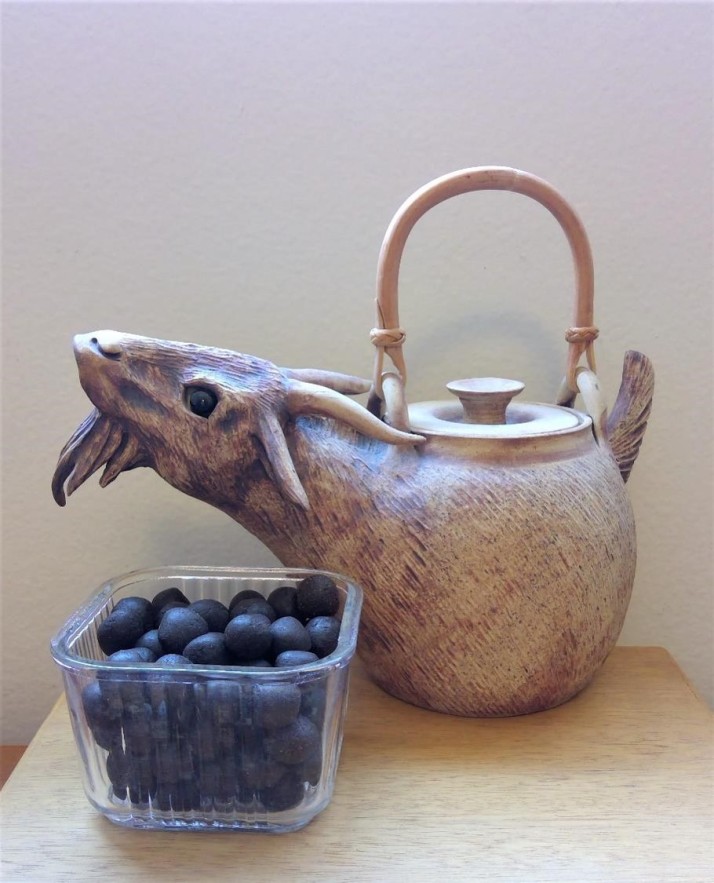
湯者蕩也,煎成清汁是也,去大病用之。散者散也,研成細末是也,去急病用之。膏者熬成稠膏也。液者搗鮮藥,而絞自然真汁是也。丸者緩也,作成圓粒也,不能速去病,舒緩而治之也。漬酒者,以酒浸藥也,有宜酒浸以助其力,如當歸、地黃、黃柏、知母,陰寒之氣味,假酒力而行氣血也;有用藥細銼,如法煮酒密封,早晚頻飲,以行經絡,或補或攻,漸以取效是也。凡諸湯用酒,臨熟加之。
- Decoction (湯 tāng) means to wash away (蕩 dàng). This means boiling herbs into a clear liquid. Use it to remove serious disease.
- Powder (散 sǎn) means to scatter (散 sàn). This means grinding herbs into a fine powder. Use it to remove acute diseases.
- Paste (膏 gāo) means to simmer (熬 áo). This means making a thick paste.
- Liquid (液 yè) means to pound fresh herbs and wring them to get their natural juices.
- Pill (丸 wán) means slow (緩 huǎn). They are made into round pellets. Pills cannot quickly remove disease, but they treat it gently and slowly (緩 huǎn).
- Steeped in liquor means soaking herbs in liquor.
- Sometimes herbs with yīn cold qì and flavor, such as dāngguī, dìhuáng, huángbǎi, and zhīmǔ, should be soaked in liquor to assist their powers; if they possess the power of liquor, they then move qì and blood.
- Sometimes herbs that have been cut into small pieces are used, such as in the method of boiling them in liquor and sealing it up [to age for a while], then drinking it often in the morning and evening to move the channels and luò-vessels.
- Sometimes [medicinal liquors] supplement and sometimes they attack, but they are used to obtain effectiveness gradually.
- Whenever various decoctions use liquor, add it when the cooking is almost finished.
細末者,不循經絡,止去胃中及臟腑之積,及治肺疾咳嗽為宜;氣味濃者白湯調,氣味薄者煎之和渣服。
Fine powders do not follow the channels and luò-vessels; they only remove accumulations within the stomach and the zàngfǔ-organs and are appropriate for treating lung disease with cough.
- When the qì and flavors are thick [rich], mix [the powder] with clear hot water.
- When the qì and flavors are thin [mild], boil [the powder] and take it along with the dregs.
丸藥,去下部之病者,極大而光且圓;治中焦者次之;治上焦者極小。面糊丸,取其遲化,直至下焦;或酒或醋,取其收斂。如半夏、南星欲去濕者,以生薑汁稀糊丸,取其易化也;湯泡蒸餅又易化,滴水尤易化。煉蜜丸者,取其遲化而氣循經絡也。蠟丸者,取其難化而遲取效也。
Medicinal pills - to remove diseases of the lower body make them very large, smooth, and round; those to treat the middle jiāo are next [in size]; those to treat the upper jiāo are very small.
- Flour paste pills are selected because they dissolve [digest] slowly; they go directly to the lower jiāo.
- Some are made with liquor and some are made with vinegar; these are selected for their ability to contract and gather in.
- When using bànxià or nánxīng to remove dampness, make pills with a thin wheat paste made with fresh ginger juice; these are selected because they dissolve [digest] easily.
- Those made with steamed cakes steeped in hot water [or soup] also dissolve [digest] easily; pills made by drizzling water are especially easy to dissolve [digest].
- Condensed honey pills are selected because they dissolve [digest] slowly and their qì follows the channels and luò-vessels.
- Wax pills are selected because they are more difficult to dissolve [digest] and because they are slow in taking effect.
 凡修丸藥,用蜜只用蜜,用餳只用餳,勿交雜用。
- Whenever using honey to make herbal pills, just use honey; if you use táng-sugar, just use táng-sugar. Do not mix them.
且如丸藥,用蠟取其能固護藥之氣味,勢力全備,以過關膈而作效也。今若投蜜相和,雖易為丸,然下咽亦易散化,如何得到臟中?若其更有毒藥,則便與人作病,豈徒無益,而又害之,全非用蠟之本意。
- Furthermore, for medicinal pills, use wax for its ability to secure and protect the qì and flavor [of the herbs], so their power and strength are completely ready. Wax is also effectively used to pass through the diaphragm.
- Today, people blend honey with [the wax]. Although it is easier to make pills, it is also easier for them to dissipate and dissolve as they go down the throat, so how can they reach into the zàng-organs? If, in addition, the pills contain toxic herbs casually given to the person to treat disease, not only is this in vain and lacking in benefit, but it further harms the patient; this is not at all the intention of using wax.
凡煉蜜,皆先掠去沫,令熬色微黃,試水不散,再熬二三沸。
When condensing honey, always skim off the foam first and simmer it until it becomes slightly yellow in color. Test it [by dripping it] into water and if it does not scatter, boil it for two or three more boilings.
每用蜜一斤,加清水一酒杯,又熬一二沸。作丸則收潮氣,而不粘成塊也。冬月煉蜜,成時要加二杯水為妙。《衍義》云:每蜜一斤,只煉得十二兩,是其度數也。
For each one jīn (598.6 grams) of honey, add one wine-cup of clear fresh water, and boil again for two or three boilings. When pills are made [with this honey] and then they are exposed to humidity, they will not turn into sticky lumps. When finishing the condensing of honey during the winter months, it is important to add two wine-cups of water; this is wonderful. Yǎn Yì says: Each jīn (598.6 grams) of honey is condensed to obtain only twelve liǎng (447.6 grams); this is the goal for the amount.
和藥末,要乘極滾蜜和之臼內,用搗千百杵,自然軟熟,容易作條,好丸也。
When blending [honey] with an herbal powder, it is important avail yourself of extremely hot honey and blend it inside a mortar, using a pestle to pound it about a thousand times, [the resulting dough] will naturally be soft and well-done, easy to roll into strips and make good pills.
凡丸散藥,亦先細切曝燥,乃搗之。有各搗者,有合搗者。其潤濕之藥,如天門冬、地黃輩,皆先切曝之,獨搗;或以新瓦慢火炕燥,退冷搗之,則為細末。若入眾藥,隨以和之,少停回潤,則和之不均也。又濕藥燥,皆大蝕耗,當先增分兩,待燥称之乃准。其湯酒中,不需如此。
Whenever making pills or powders, first thinly slice the herbs and roast them dry in the sun before pounding them. Sometimes herbs are pounded separately and sometimes they are pounded together. All moist damp herbs like tiānméndōng or dìhuáng are first sliced, roasted dry in the sun, and then pounded by themselves; or use a new tile on a gentle fire to bake them dry. When they are pounded after cooling off, they can be finely powdered. If they are put in and blended with all the other herbs, some of them will absorb moisture, and then they will not blend evenly. Also, when moist herbs are dried, [their weight] is greatly consumed; standard procedure is to first increase the measurement [called for in the recipe] and wait for it to dry before weighing. In decoctions and liquors, there is no need to do [all] this.
凡合丸藥,用密絹令細。若篩散藥,尤宜精細。若搗丸,必於臼中搗數百過,色理和同為佳。
Whenever putting together herbs for pills, use [a sieve made with] densely-woven silk to make [the powder] fine. If sifting herbs for a powder (sǎn) preparation, it is especially appropriate to make the powder extremely fine. If pounding [herbs into powder for] pills, they must be pounded inside a mortar several hundred times, so that the color and texture is well-blended together.
 凡藥浸酒,皆須切細,生絹袋盛,乃入酒密封,隨寒暑目數,視其濃烈,便可漉出,不須待酒盡也。渣則曝燥微搗,更漬飲之,亦可散服之。
Whenever herbs are soaked in liquor, they must [first] be thinly sliced and contained in a raw silk bag, then put into the liquor and sealed. Then depending on the temperature of the environment (cold and summerheat) they must be inspected frequently to see the concentration [of the extraction]. Then they can be filtered out and removed. One need not wait until [the extraction into] the liquor is maximum. When the dregs are roasted dry in the sun and lightly pounded, they can then be further steeped and drunk. They can also be taken as a powder.
凡合膏,或以醋,或酒,或水,或油,須令淹浸密覆。至煮膏時,當三上三下,以洩其熱勢,令藥味得出,上之使匝匝沸,下之要沸靜良久,乃上之。如有韭白在中者,以兩段漸焦黃為度,如有白芷、附子者,亦令小黃為度。絞膏要以新布,若是可服之膏滓,亦可以酒煮飲之,可磨之膏渣,亦宜以敷患處,此蓋欲兼盡具藥力也。
Whenever putting together a gāo (ointment, paste, plaster, etc.), sometimes vinegar, liquor, water, or oil is used. One must submerge the herbs so they are deeply covered. At the time of boiling the herbs into a gāo, one should [heat it] up three times and [let it cool] down three times in order to discharge the influence of the heat and allow the herbal flavors come out [into the liquid]. [In heating it] up, make it boil everywhere; [in cooling it] down, the boiling must quiet down for a good long time, and then [heat it] up [again].
- If there is jiǔbái within the gāo, the goal is for the jiǔbái to become burnt yellow from end to end.
- If there is báizhǐ or fùzǐ, also take it turning light yellow as the goal.
One must use new cloth when wringing out the gāo [from the cooked herbs]. If the gāo dregs can be taken internally, one can also use liquor to boil them and drink it; or one can wet-grind the gāo dregs and apply them to the affected site. These are all effective ways to use medicine.
凡湯、酒、膏中用諸石藥,皆細搗之,以新絹裹之,內中。《衍義》云:石藥入散,如鐘乳粉之屬,用水研乳極細,必要二三日乃已,以水漂澄,極細方可服耳,豈但搗細以絹裹之為例耶。
Whenever minerals [‘stone herbs’] are used in various decoctions, liquors, or gāo, they are all finely pounded, wrapped in new fine silk, and put in [the herbal preparation]. Yǎnyì says: When minerals are put into powdered formulations, if they are similar to zhōngrǔfěn (stalactite powder), water-grind them extremely finely; one must use water to rinse and let it settle out for two or three days and then stop. They can only be taken internally when it is extremely fine. It is not only pounded fine, but it is also wrapped in silk as a rule.
凡煎膏中有脂,先須揭去革膜子,方可用之。如豬脂,勿令經水,臘月者尤佳。
Whenever fat is boiled into a gāo, one must first take off the leathery membrane [surface layer]; only then can it be used. If it is pork fat, do not let it come in contact with water. Pork fat prepared during the twelfth lunar month [around January in the modern calendar] is especially good.
凡膏中有雄黃、朱砂輩,皆當令研如面,俟膏畢,乃投入,以物杖攪之;不爾,沉聚在下不勻也。
Generally, in a gāo, all substances like xiónghuáng or zhūshā should be ground [as fine as] flour. Wait for the gāo to finish [cooking] and then throw them in. Use something like a stick to stir it; otherwise, it will sink and gather in the bottom and be unevenly spread.
凡草藥燒灰為末,如荷葉、柏、茅根、薊根、十灰散之類,必燒焦枯,用器蓋覆以存性。若如燒燃柴薪,煅成死灰,性亦不存而罔效矣。
Whenever powdering herbs that have been reduced to ashes, such as héyè, huángbǎi, báimáogēn, or dàjìgēn, in the category of Shíhuī Sǎn (Ten Ash Powder), one must burn them until they are scorched and withered, covering the pot with a lid to preserve their nature. For example, when firewood is burned, it is forged into dead ash; the nature is not preserved and it is ineffective [as medicine].
凡諸膏膩藥,如桃仁、麻仁輩,皆另搗如膏,乃以內,成散中,旋次下臼,合研令消散。
Whenever there are various oily greasy herbs like táorén or márén, pound them all separately until they are like a gāo (paste). Then combine them with the other ingredients of the powder. Pour them back into the pestle and grind them together [again] to make the oily herb disperse evenly into the powder.
1繆希雍《炮炙大法》明 Páozhì Dàfǎ (Fundamental Methods of Processing Medicinals) by Miào Xīyōng (c. 1546-1627).
2《先醒齋醫學廣筆記》
3 雷敩《雷公炮炙論》 written by Léi Xiào during the Southern and Northern Dynasties period.
4. 膏 gāo: This word can mean ointment, plaster, paste, or syrup. Its basic meaning is oily or fatty, but in medicinal preparation, it is some type of thick liquid or semi-solid.
5. 酒 jiǔ can mean rice-wine or distilled liquor or any alcohol-based liquid. Based on context, one must decide which is meant, or sometimes the term is used generically. I will translate it as liquor, but in many cases, it probably means rice-wine.
6. This section defines each type of herbal preparation using another word that sounds and/or looks similar to the original word. Here, 蕩 dàng is used to define 湯 tang (decoction). 蕩 dàng has many relevant meanings, such as dislodge, sweep away, drain off, clear away, eliminate, and so forth. This section is based on a passage from 王海藏《湯液本草》 Tāngyè Běncǎo (Decoctions and Materia Medica) by Wáng Hǎicáng (Yuán).
7. This refers to a type of sourdough flat-cake that becomes hard. At the time of use, it is soaked in a liquid to soften it. The resulting mush can be used as a binder for pill making. Thanks to Leo Lok for his research on this.
8. Honey pills are often sealed in wax so they do not dry out and otherwise deteriorate. When taken, the outer layer of wax is peeled off. A pill may also be made with wax to help it dissolve later. Therefore, it can pass through the diaphragm.
9. This probably refers to the equivalent of the soft-ball stage in candy making (235° F–240° F with a sugar concentration of 85%). The higher the concentration of sugar, the more the honey acts as a preservative. Too much moisture can lead to unwanted fermentation, and also make the texture too sticky.
10. The idea of boilings is still a bit of a question. In some cases, it means adding a spoonful of water to a boiling liquid. This will slow the boiling down. When it gets back up to a full boil, that counts as one boiling. It is not clear if that is what being done here, although the same paragraph discusses adding water. Is all the water added at the beginning? Or is this adding it a spoonful at a time and then bringing it back up to a boil?
11. In an earlier section, the author says to add four liǎng (149.2 grams) of water. There are 16 liǎng in 1 jīn so this is a 4:1 ratio of honey to water.
12. 寇宗奭《本草衍義》北宋 Běncǎo Yǎnyì by Kòu Zōngshì (Northern Sòng).
13. In an earlier section, the author specifies 12.5 liǎng (466.25 grams) as the goal. If you use twelve liǎng, the honey is condensed until it is three-quarters of the original weight.
14. Many modern people are horrified at the idea of heating honey beyond a certain temperature, because this destroys enzymes and some nutrients. However, ancient recipes frequently call for processed honey. They did not use honey because of its enzymes. They used it because it nourishes and moistens. They used it as a binder for pills. They used it because the sweet flavor harmonizes and because it makes the herbs taste a little better. Having made honey pills many times, I have found that processed honey makes better honey pills. They are less sticky and hold their shape better.
15. Charcoal is made by cooking wood (or other plant matter) in a low oxygen environment. It becomes almost pure carbon, and is called char. This process burns off volatile compounds such as water, methane, hydrogen, and tar. The substance retains its original shape. This is preserving its nature. If burned in an oxygen-rich environment, it becomes powdery ash, so its nature is not preserved.
Please log in or sign up to comment.